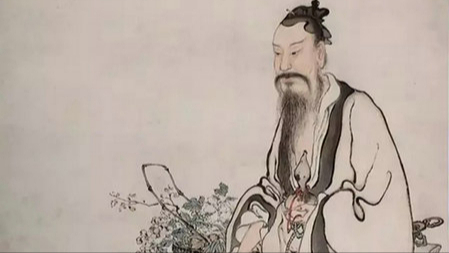
Lyu Dongbin
Introduction
Lyu Dongbin is a legendary figure in Chinese mythology, revered as one of the Eight Immortals (Ba Xian) in Taoist tradition. He is often associated with various Taoist philosophies and practices, particularly in the realm of health and martial arts. His contributions to Taoism are profound, with his influence extending to martial arts, health exercises, and spiritual practices. Lyu Dongbin's legacy includes the Chunyang Sect, which is associated with Taoist traditions and Lyu Dongbin's teachings. However, it is not specifically recognized as a key branch of Wudang Taoist kung fu. Wudang martial arts are more commonly linked to figures like Zhang Sanfeng, while the Chunyang Sect is primarily focused on Taoist practices and spiritual cultivation.
Historical Background
Lyu Dongbin is believed to have lived during the Tang Dynasty (618-907), a period notable for its cultural and philosophical advances. He is often depicted as a Taoist priest and is celebrated in numerous Chinese legends. Among the Eight Immortals, Lyu Dongbin is perhaps the most renowned, with his stories and practices deeply ingrained in Chinese culture. The Wudang Mountain in Hubei province, Central China, is considered the birthplace of Wudang Taoist kung fu. While Lyu Dongbin is a revered figure in Taoist tradition, there is no direct historical evidence to support the claim that he significantly influenced Wudang martial arts. Instead, Wudang kung fu is more closely associated with figures like Zhang Sanfeng." Wudang Taoist kung fu is esteemed within Chinese martial arts, often mentioned alongside the Buddhist Shaolin kung fu for its prominence and depth.
Contributions to Martial Arts and Health Practices
Lyu Dongbin is credited with the creation and development of several martial arts and health practices that are integral to Taoist teachings. These include Wu Xing Zhuang (the five-elements exercise), Ba Bao Zhuang (the eight treasures exercise), Jiu Shi Tu Na Fa (the nine-stances breathing techniques), and Chunyang Da Gong (the supreme qigong exercise of the Chunyang Sect). These exercises and techniques have been regarded as sacred arts, traditionally passed down through generations among Taoist priests, often through a single-person inheritance system. This method ensured that the knowledge remained pure and undiluted, being transmitted to only the most talented disciple of each generation.
Wu Xing Zhuang
Wu Xing Zhuang, or Wu Xing Zhuang Gong, is a set of qigong exercises rooted in the Taoist concept of wu xing, which refers to the five elements: water, wood, fire, earth, and metal. The exercises are designed to enhance health by promoting the circulation of vital energy within the body. Wu Xing Zhuang is classified under daoyin qigong, which involves dynamic exercises as opposed to static meditations. It serves as foundational training for Taoist martial artists, allowing them to practice their art discreetly as part of their daily routine.
Each stance in Wu Xing Zhuang corresponds to one of the five elements and is associated with specific internal organs and systems of the body. For instance, the water stance relates to the kidneys and urinary system, while the wood stance is linked to the liver and digestive system. Through these exercises, practitioners aim to balance the yin and yang energies within their bodies, thus strengthening their immune systems and promoting overall health. Photo Gallery(8 pictures)CategoriesChinese PhilosophyTagTaoismMythologyRelatedHan XiangziWu Xing ZhuangYongle PalaceEight ImmortalsCatalogue1. Introduction2. Historical Background3. Contributions to Martial Arts and Health Practices4. Wu Xing Zhuang- - - []








